The name ‘Persia’ comes from Pars (today Fars), the region where the Achaemenid Persian Empire arose, founded by Cyrus the Great around 550 BC. That empire, which emerged in what is now Iran more than 2,500 years ago, was one of the great civilisations of history, famous for its water engineering and architecture.
PARS EcoTech takes its name from that legacy: from the Persian tradition of cooling with air and water, naturally and without using more energy than necessary, to today’s evaporative coolers.
+2500years of Persian legacy
Pars (today Fars)Home region of the Achaemenid Persian Empire
Around 550 BCCyrus the Great founds the Achaemenid Empire
TodayPARS EcoTech
The history of evaporative cooling
Persian wind towers (‘badgir’): this is how homes in Persia were kept cool long before electricity.
Persia · thousands of years ago
Long before electricity, on the Iranian plateau, ancient Persia, homes were already being cooled by the wind. Wind towers, called ‘badgir’ (from the Persian bād, ‘wind’, and gir, ‘catcher’), are one of the great solutions of Persian architecture for living in hot, arid climates.
Wind catchers are known from ancient Egypt (around 1300 BC), but it was in Persia that the technique was developed, refined and spread over centuries until it became a hallmark of its architecture, from Yazd and Kashan to the coast of the Persian Gulf.
A wind catcher, or wind tower, is an architectural device designed to capture fresh air and channel it into buildings while expelling hot air, providing an efficient form of natural ventilation without the need for electricity. These structures were built with openings strategically oriented to catch the prevailing breeze and direct it inside, where the air passed over water features or damp surfaces, cooling before being distributed through the rooms.
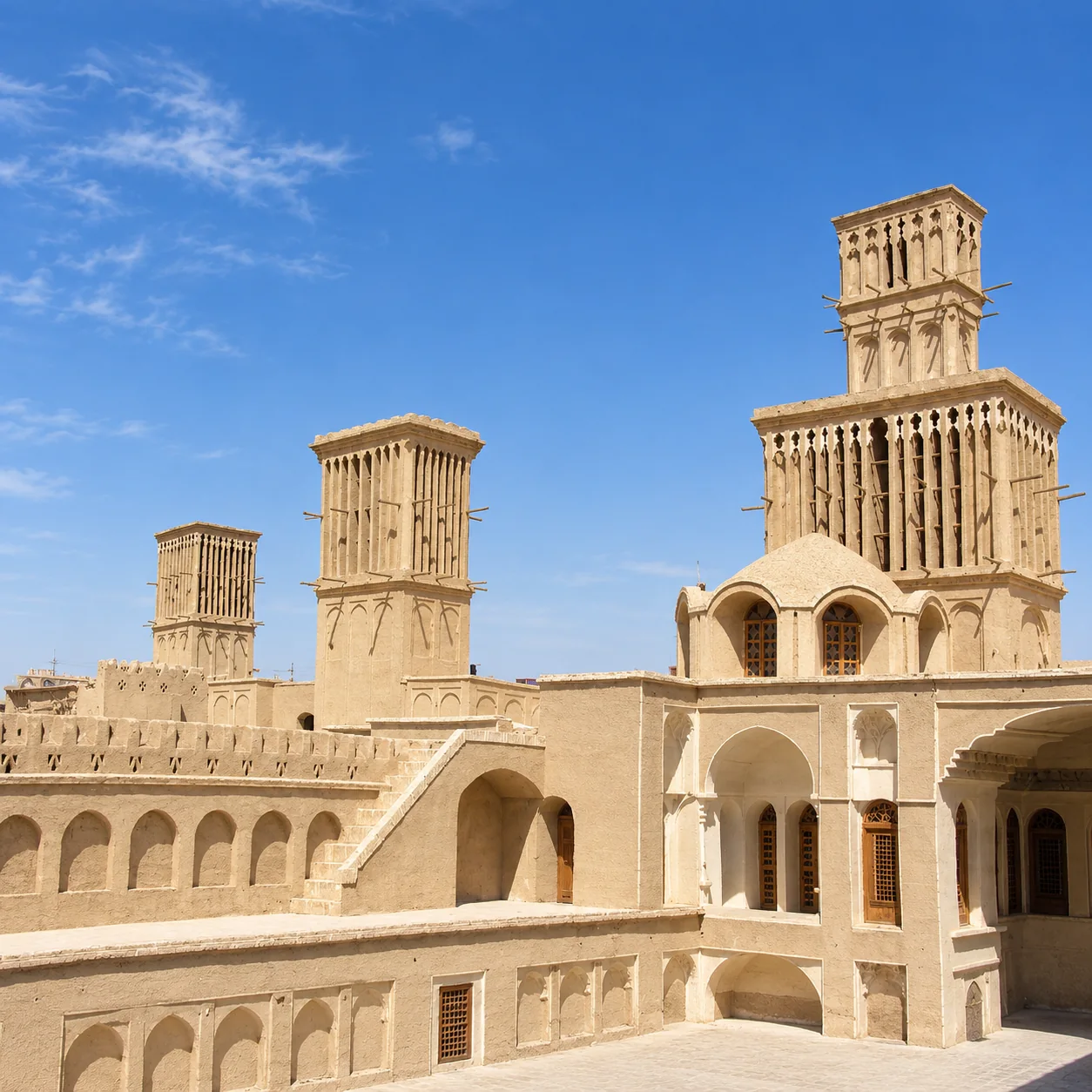
Wind towers in Yazd, the city of badgirs
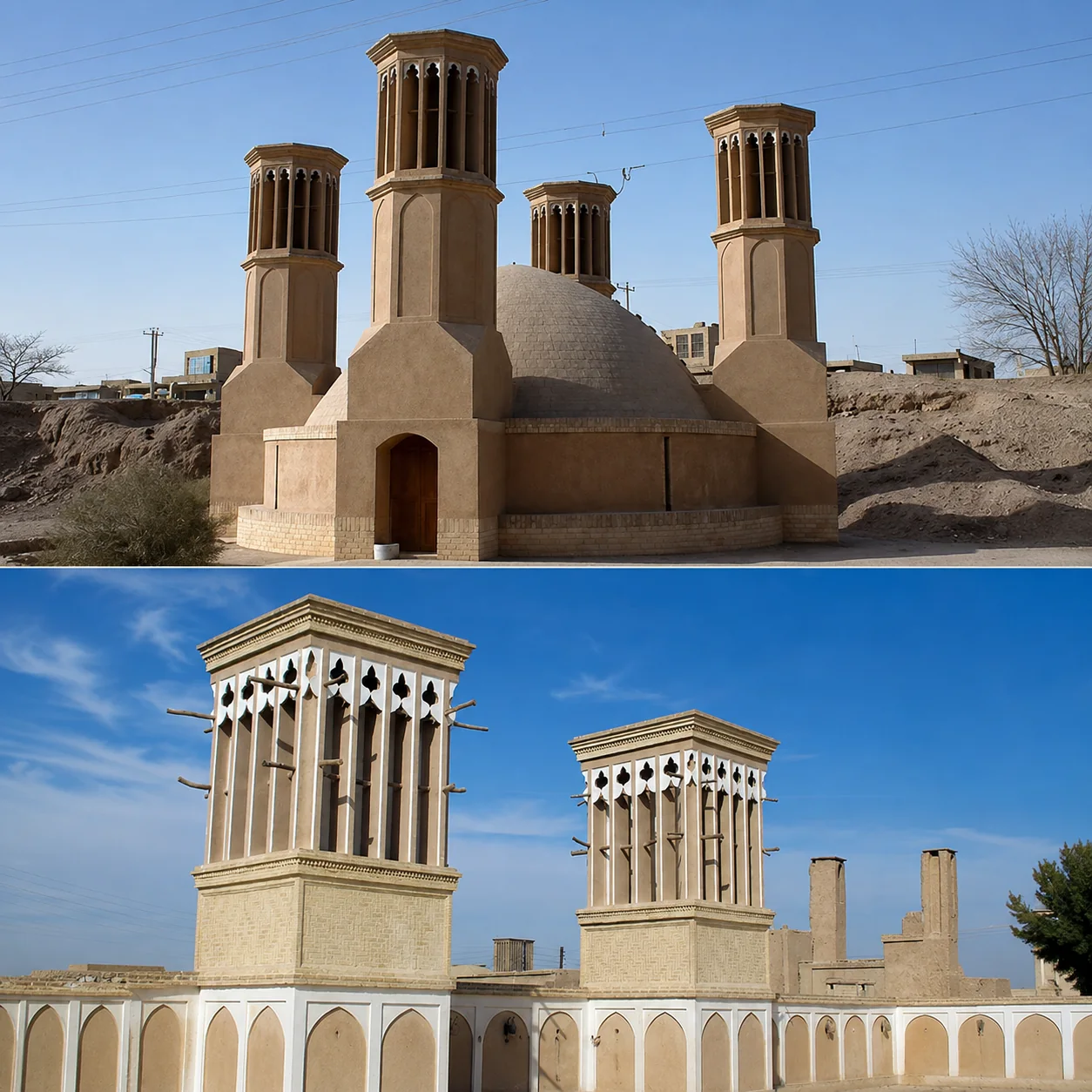
Each region of Persia developed its own style, adapted to its climate and prevailing winds. In Yazd and Kashan, in the heart of the central desert, tall towers with four, six or eight sides were built, able to catch the breeze from whichever direction it came.
In Ardakan and Meybod, towers with a single side or with two to four closely spaced sides predominate; in Kerman, the designs are simpler, with four sides; and in Sistan, the towers face a single prevailing wind.
On the more humid coast of the Persian Gulf, slender, tall towers were built, facing the sea breeze, where the priority was to keep the air moving. Even the domed water reservoirs, the ‘ab anbar’, incorporated wind towers to keep the water cool.
Each region of Persia developed its own style of tower
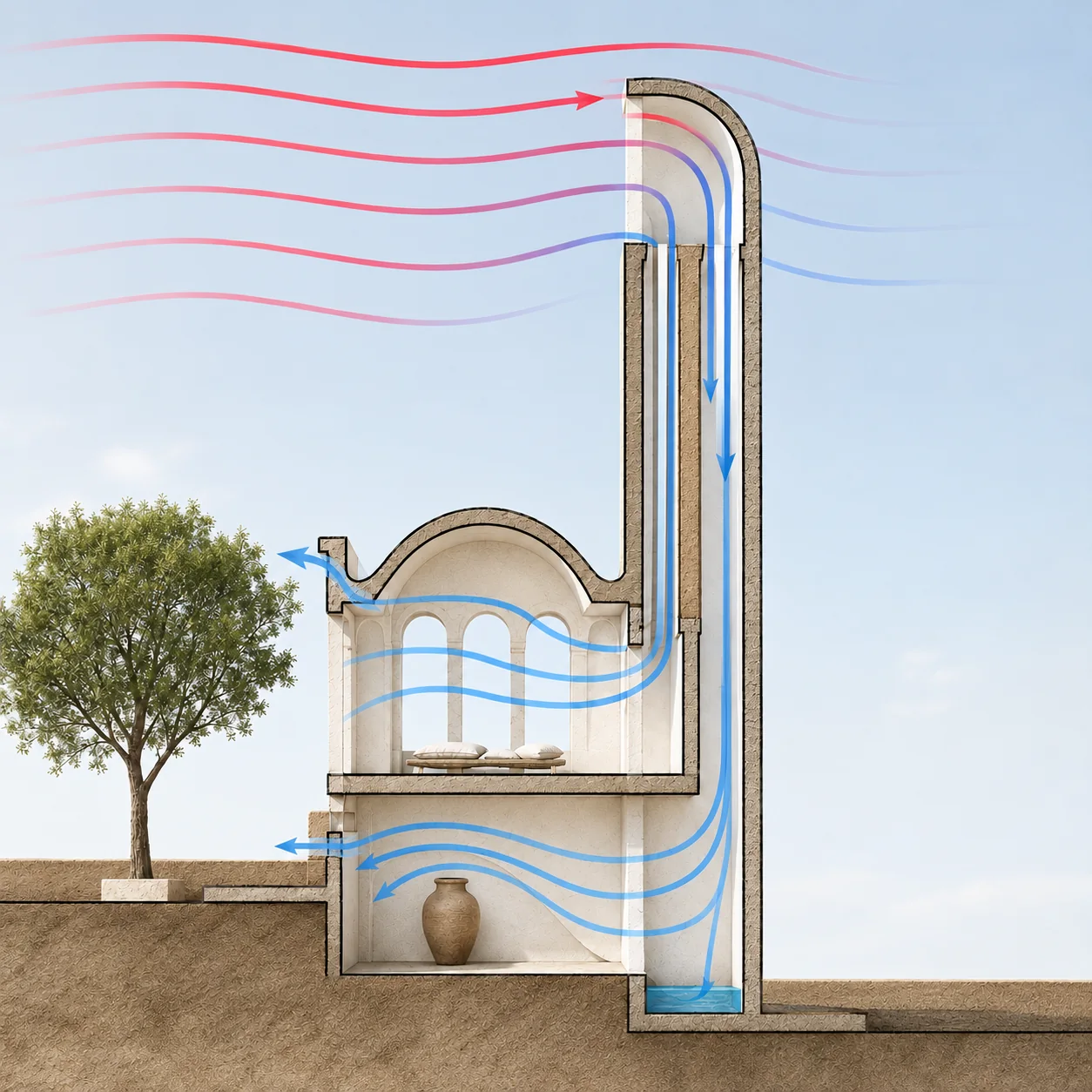
The wind, channelled through the tower’s ducts in the roof, was directed strategically to improve air circulation inside the building.
This diagram shows the route: hot wind enters at the top of the tower, descends through the channel and cools on the way. On reaching the bottom, next to the pool of water, the now-cool air is distributed through the rooms of the house.
hot wind
the wind cools while it moves inside the channel
cool air
cool air
Pool of water
The wind is channelled through the ducts of the roof tower
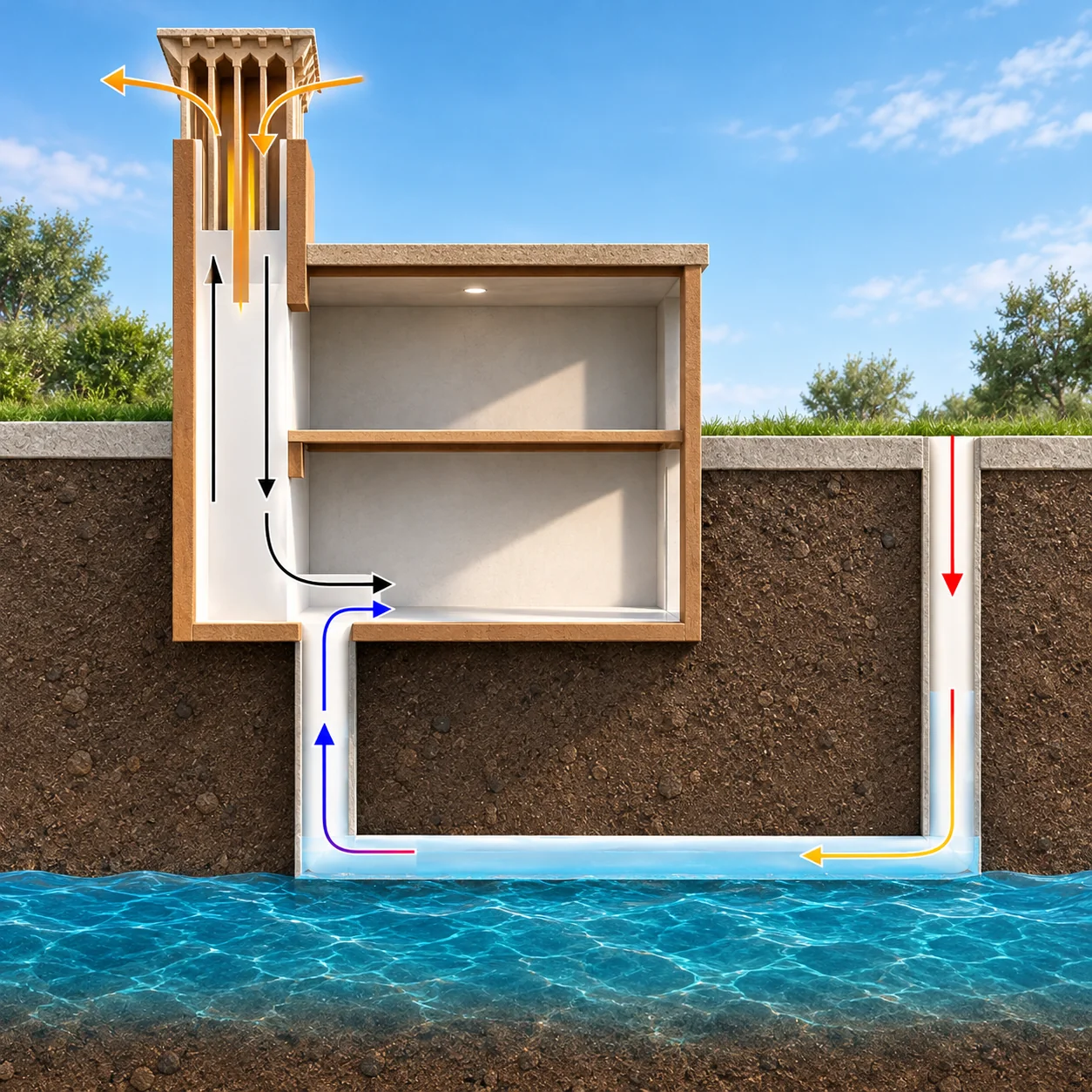
These traditional ventilation systems not only caught the surface breeze but also made use of the coolness of the groundwater in the qanats, ancient underground channels designed to carry water over long distances in arid regions. By directing the air through these channels, the wind was naturally cooled before being released inside the buildings, creating a cool, comfortable environment without the need for mechanical devices.
Wind tower
Air outlet
Wind
Wind direction
Cooled basement
Low-pressure zone
Ground
Air drawn into the qanat
Water flowing to the qanat
Airflow (cooled by convection and evaporation)
The air is cooled by the water of the qanats before entering the house
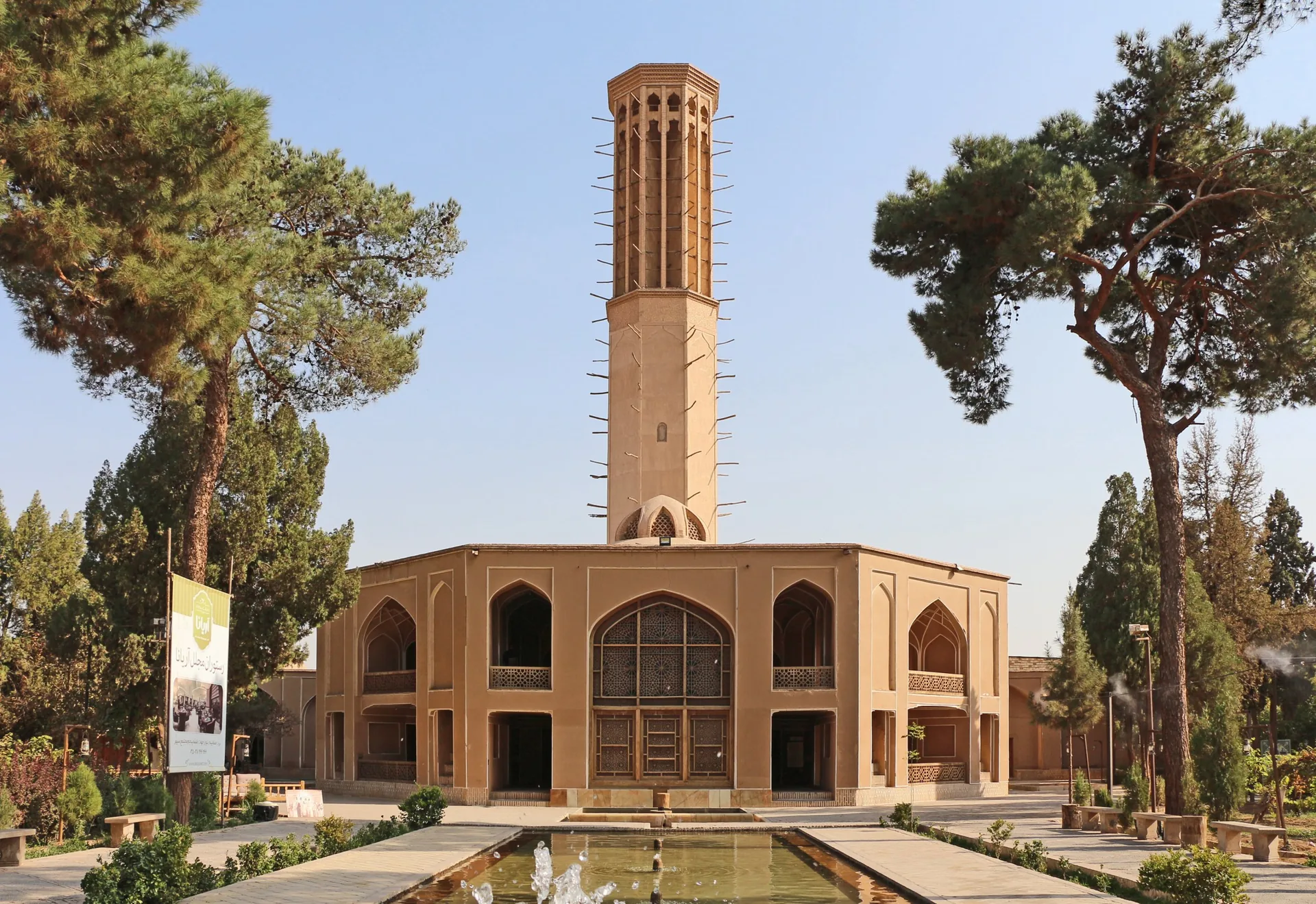
The city of Yazd, known as the city of badgirs, preserves some of the finest examples. In the Dowlatabad Garden stands a tower of about 33.8 metres, built around 1747 and considered one of the tallest adobe towers in the world. In 2017, the historic city of Yazd was declared a UNESCO World Heritage Site, partly for its qanats and badgirs.
This natural cooling method was particularly effective in Persia’s hot climates, keeping the temperature pleasant inside homes and other architectural spaces. Thanks to its innovative, sustainable design, the technique continues to inspire modern passive ventilation and eco-friendly cooling systems in contemporary architecture.
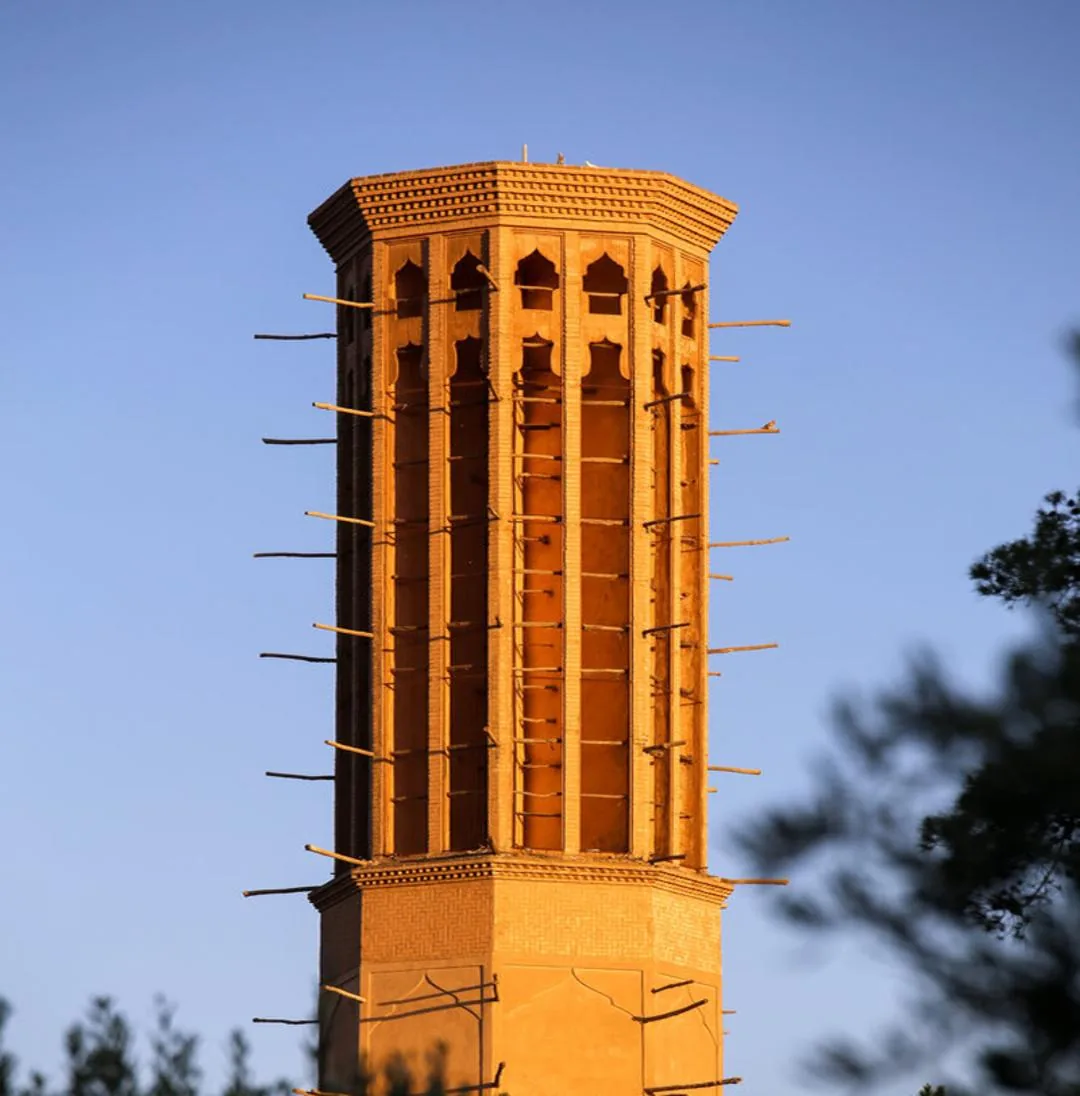
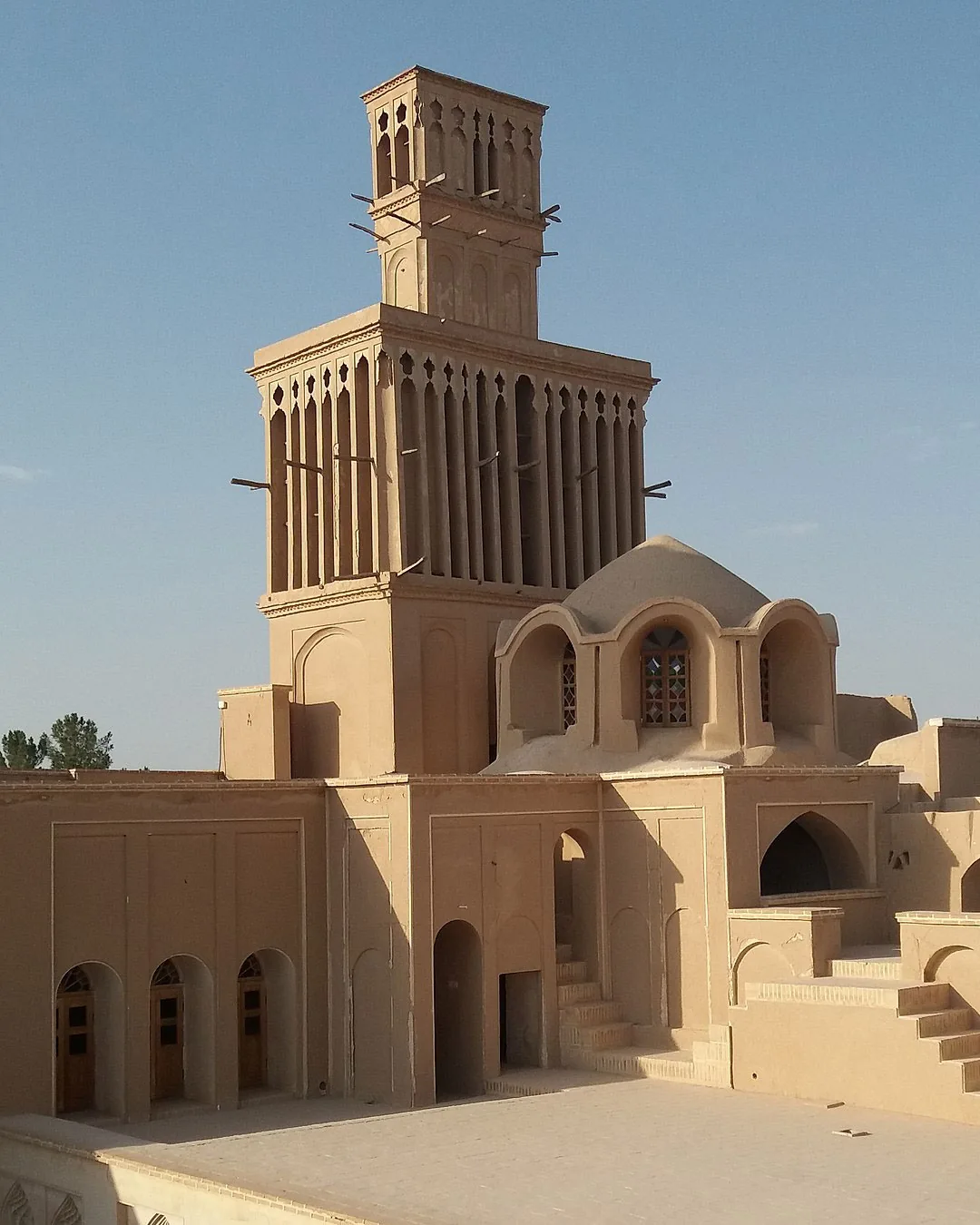
Dowlatabad Garden, in Yazd: its badgir is about 33.8 metres tallOctagonal wind tower: the vertical openings catch the airWind tower on a traditional adobe house
Today: the evaporative cooler
Today, the wind catcher has been replaced by the evaporative cooler, a more natural and environmentally friendly way of cooling.
An evaporative cooler (also known as a ‘swamp cooler’) is a device that cools the air by evaporating water.
What is evaporative cooling?
Remember the chill after swimming on a hot, dry day, when you step out of the water and feel the breeze on your wet skin? Or simply dip your finger in a glass of water and blow on it: you will feel a cool sensation on your finger and notice the water evaporating. That is evaporative cooling.
Evaporative coolers recreate this natural process and provide a constant flow of fresh, refreshing air in a hot, uncomfortable environment. When air conditioners began to be advertised for hotels and restaurants in the first half of the last century, evaporative coolers already existed and had been in use for many years.
The first evaporative coolers were known as ‘swamp coolers’ because of the large amount of moisture they released into the air, typical of a primitive technology. Today’s coolers are designed to achieve maximum cooling with minimum humidity in the air, but the term ‘swamp cooler’ is still used to refer to any type of evaporative cooler.
hot, dry air
air absorbs water
How does it work?
How evaporative cooling works
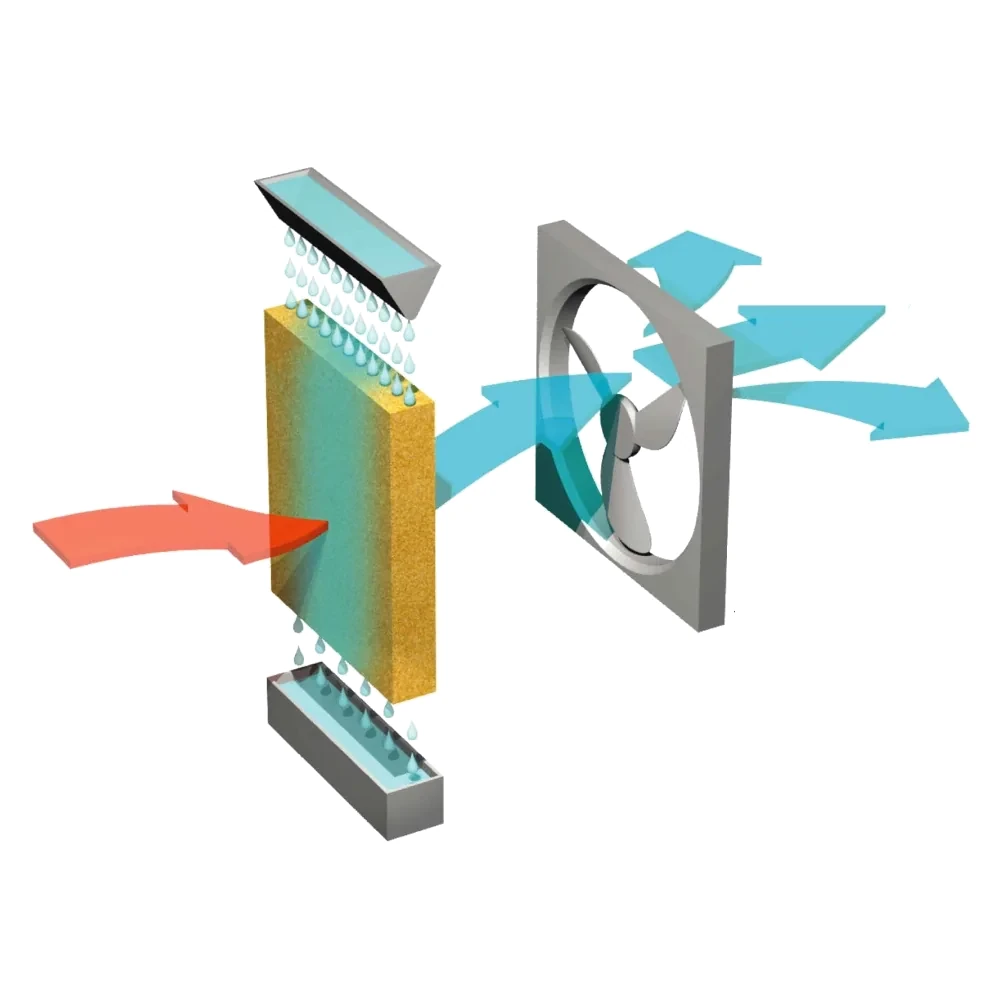
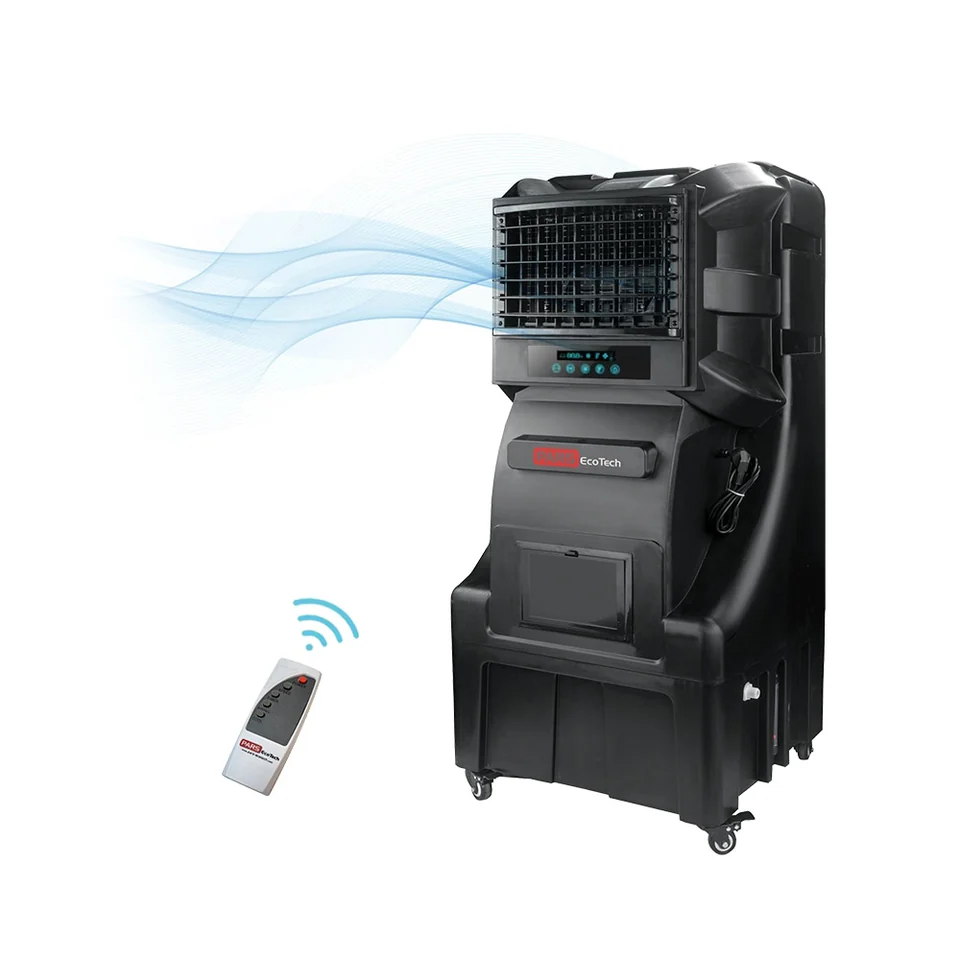
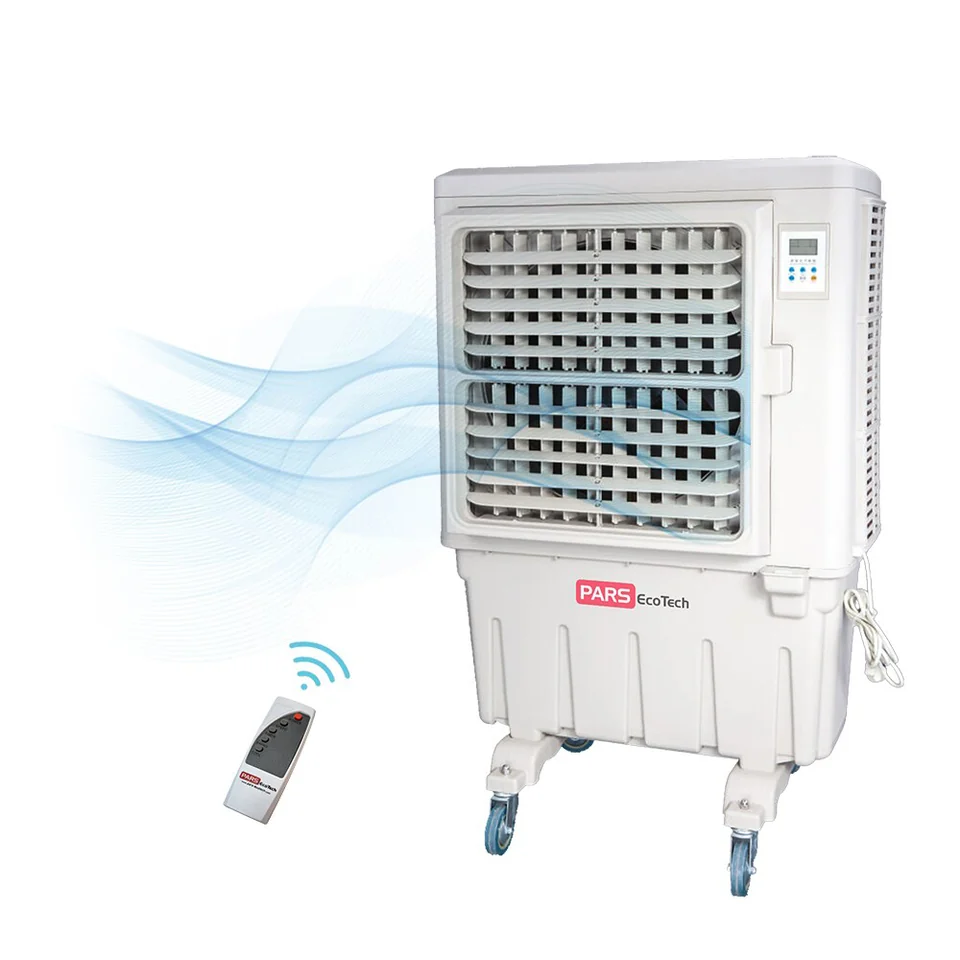
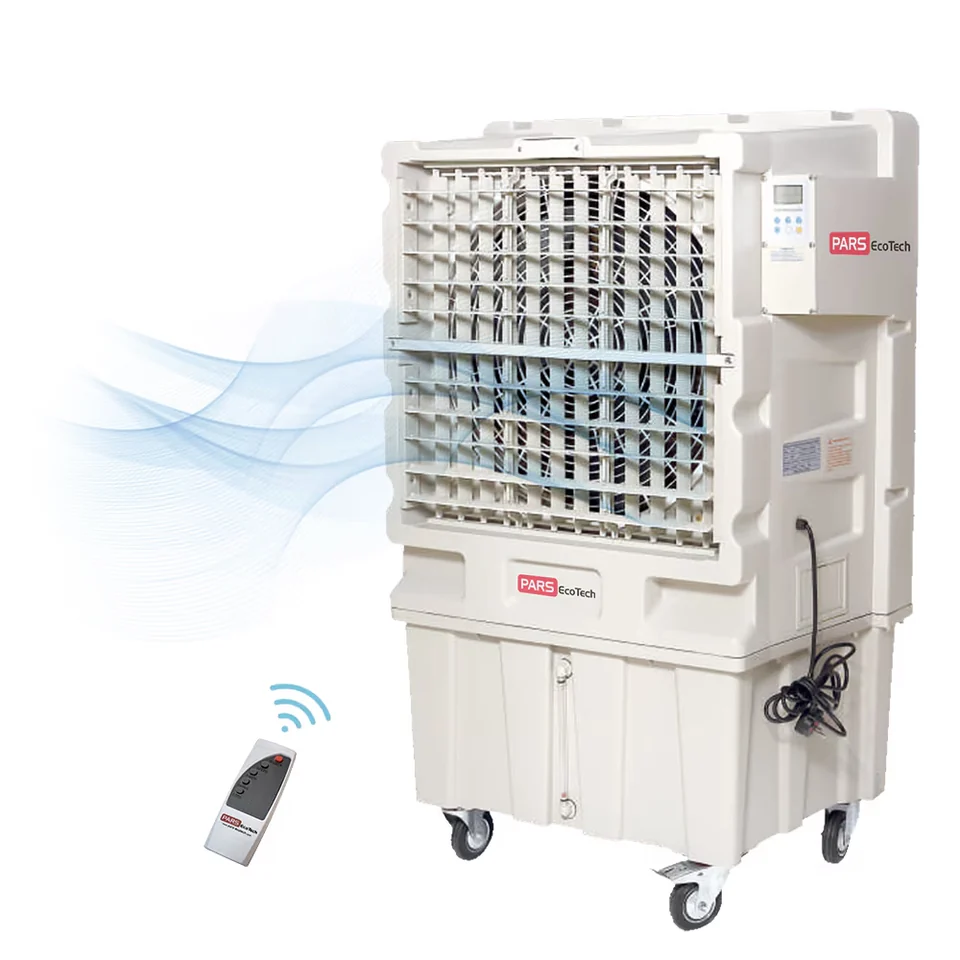
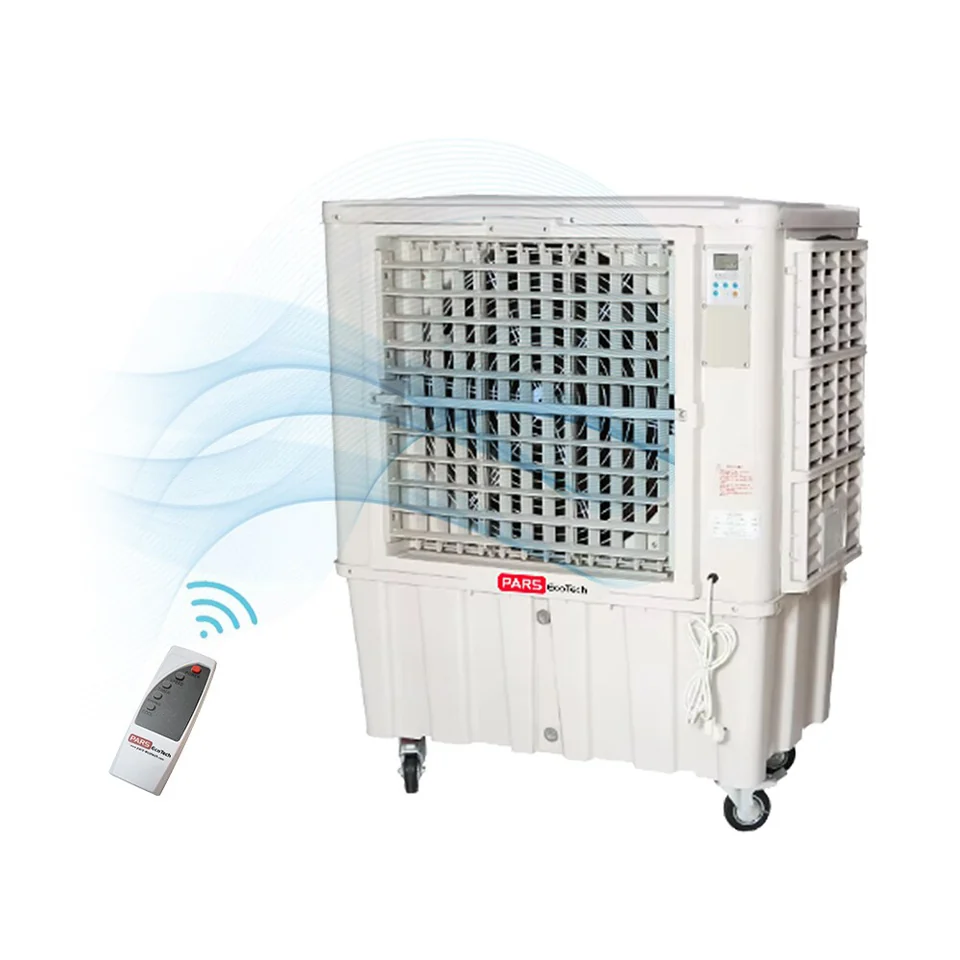
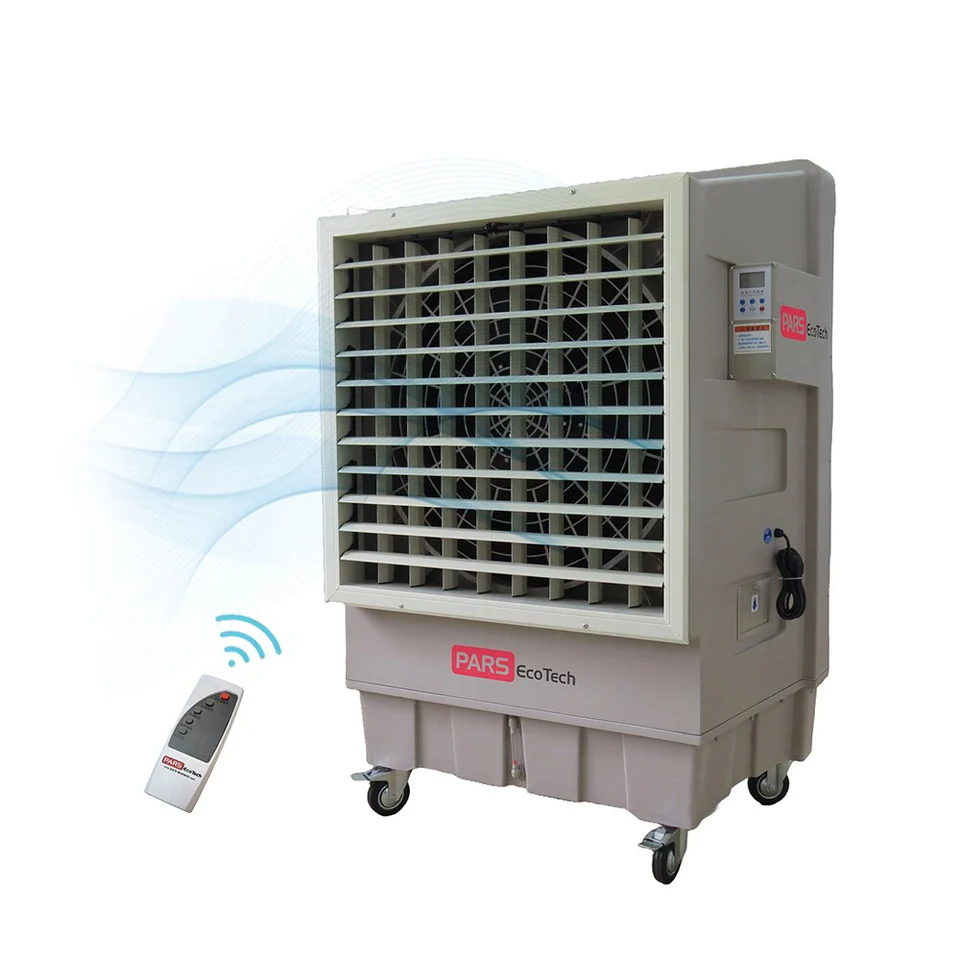
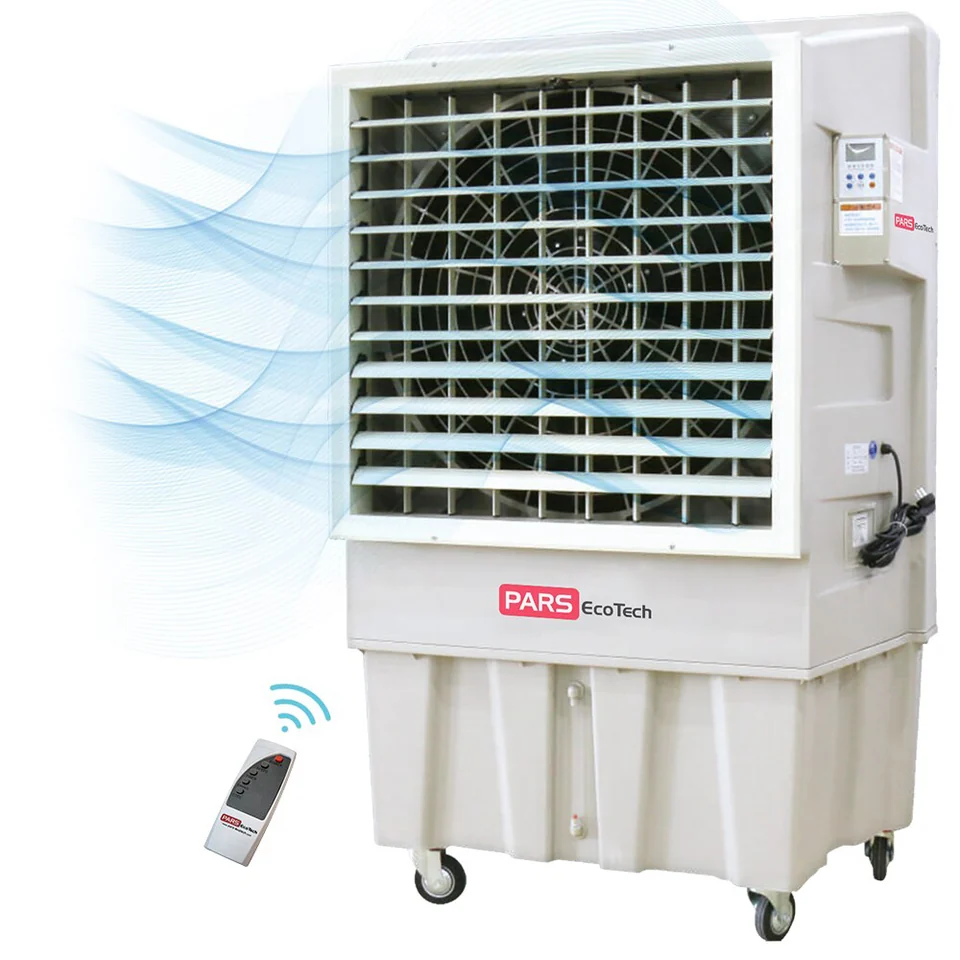
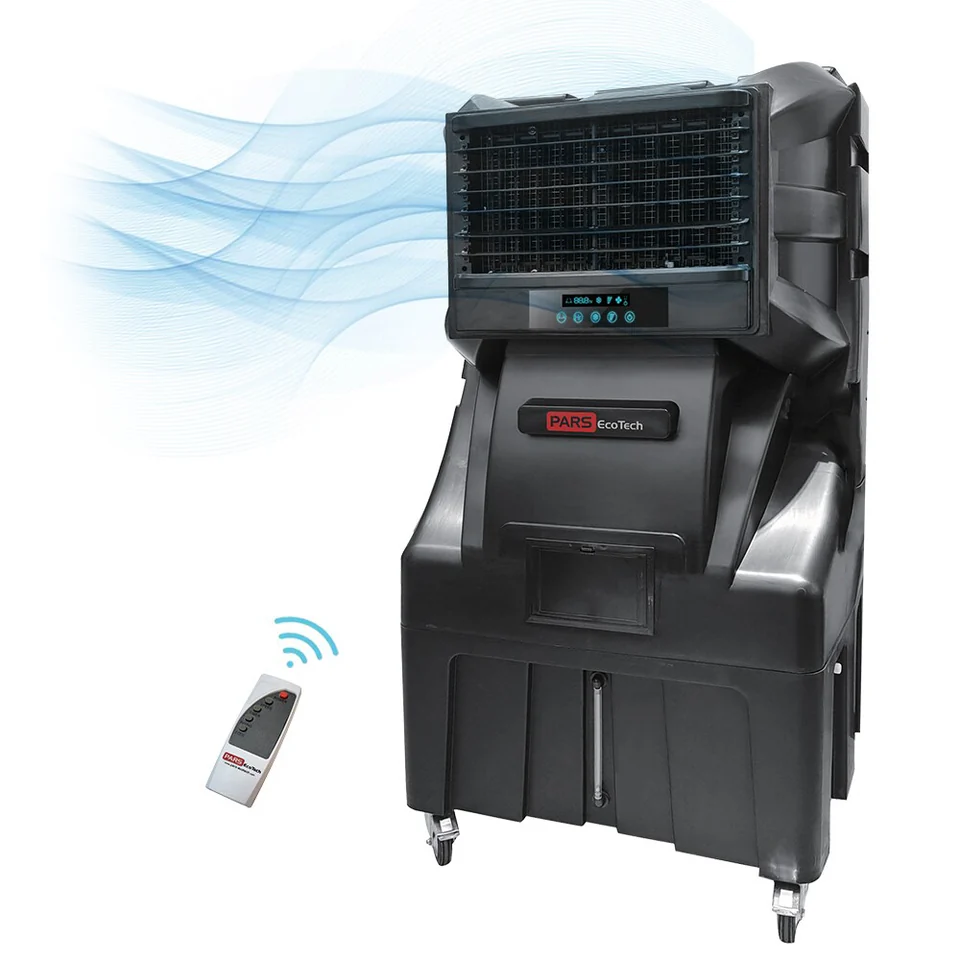
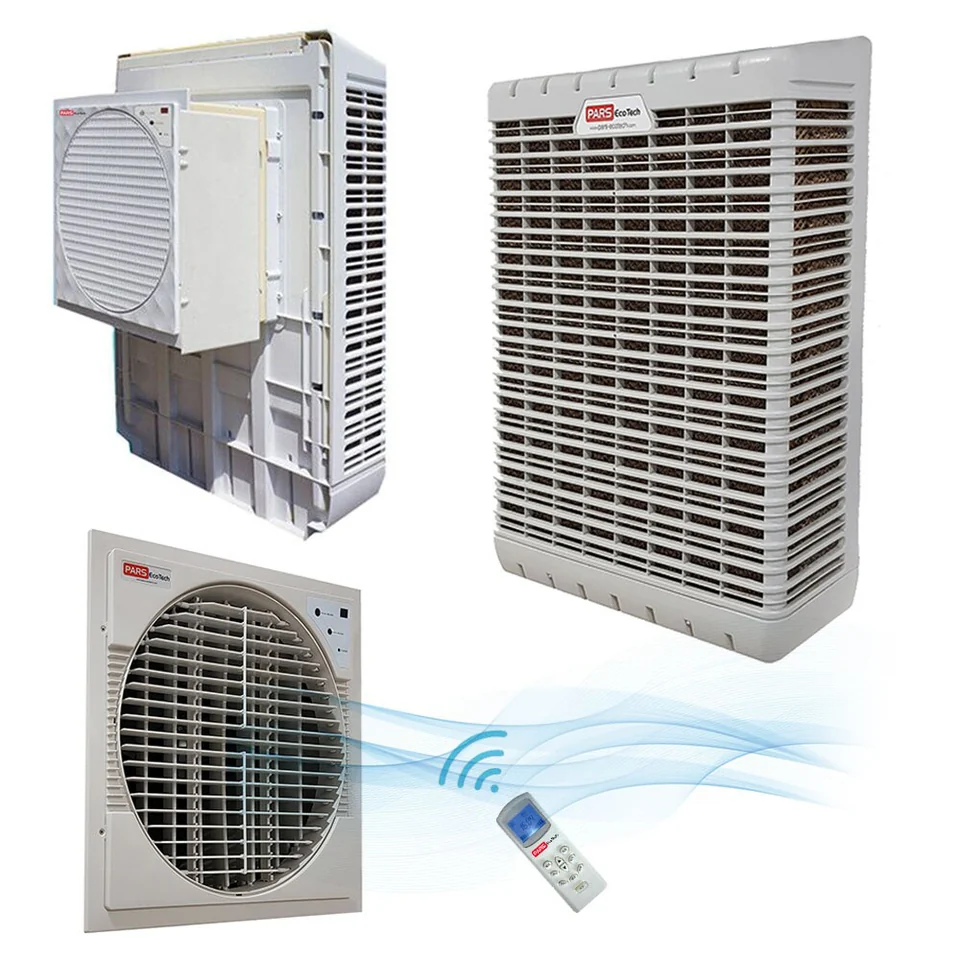
Evaporative coolers, such as those made by PARS EcoTech, circulate water through saturated damp pads while driving air across their whole surface; the hot air absorbs the moisture and the temperature of the air leaving the unit drops.
The heart of an evaporative cooling system is the evaporative pad, where the water evaporates and cools and through which the air passes. Evaporative pads are made from corrugated cellulose sheets glued together; these sheets are chemically impregnated with special compounds to prevent rot and ensure a long service life.
A special water distribution system spreads the water over the surface of the damp pad and ensures an even supply, keeping the surface in contact with the air thoroughly soaked.
The fans create negative pressure that draws air through the damp pads, where contact between the air and the water causes evaporation. A control system switches on the water pump and the fan distributes the fresh air. Relative humidity is lower in the afternoon, when the temperature is at its highest.
And the lower the humidity, the better evaporative cooling works. In other words, the cooling effect is greatest just when you need it most.
Water distributor
Cool refreshing air
hot, dry air
Evaporative pad
Fan
Water tank
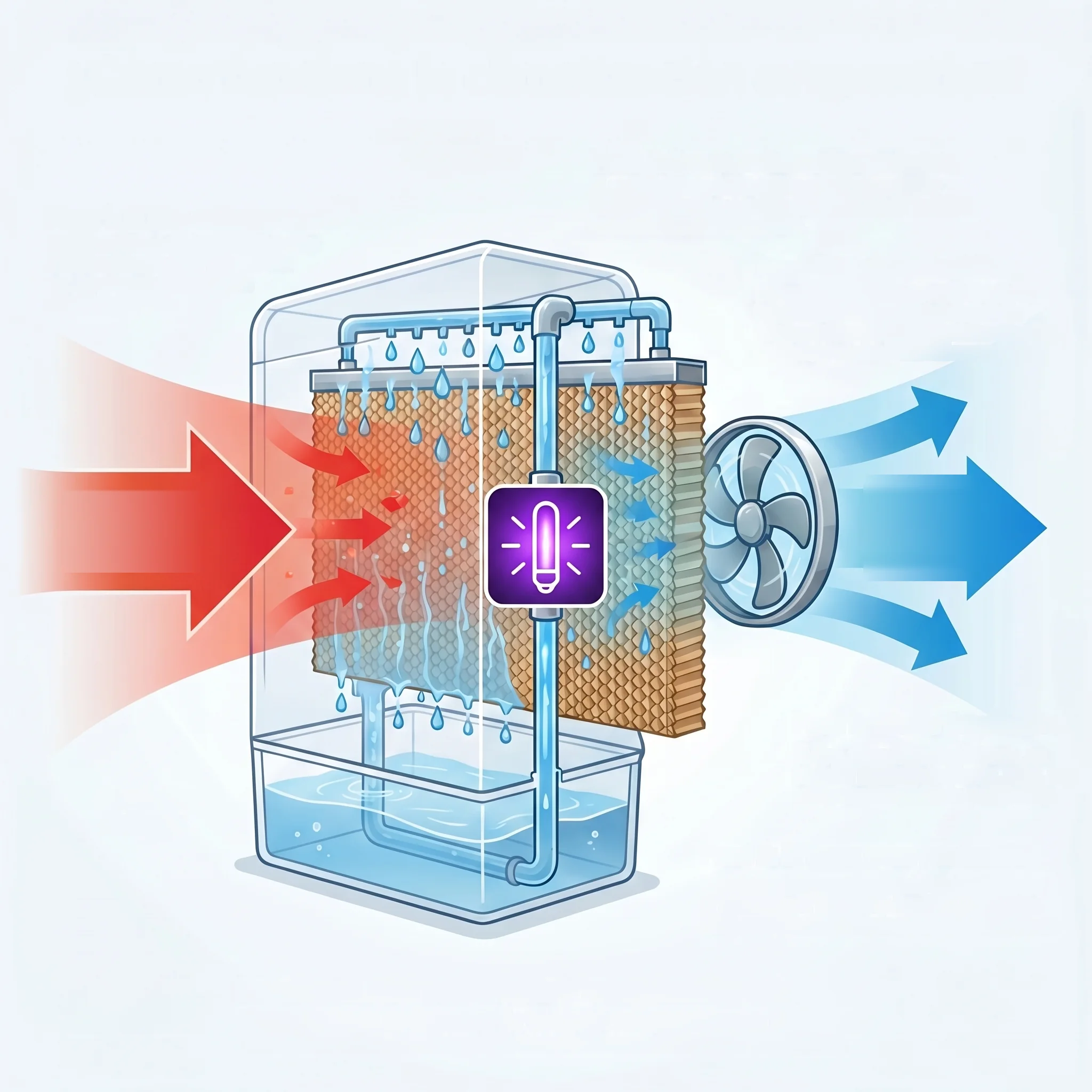
How do PARS EcoTech evaporative air coolers work?
A step-by-step visual explanation
How does evaporative cooling work?
Hot air enters.
Warm, dry outdoor air is drawn into the unit to start the cooling cycle.
UV light treats the water.
As the water rises from the tank through the pipe, a UV light source treats it to ensure it is clean and free of impurities.
The pads are moistened.
Treated water is spread evenly over the evaporative pads, keeping them constantly saturated.
The air is cooled.
A powerful fan draws air through the damp pads; the evaporation of the water absorbs heat, cooling the air instantly.
Clean air comes out.
The now cool, filtered air is driven into the room, providing efficient, healthy cooling.
Water tank
Hot air
Fresh air
Cleaner air and efficient cooling.
The system achieves a natural drop in temperature with minimal energy consumption compared with traditional air conditioning.
How does evaporative cooling work?
Hot air enters. Warm, dry outdoor air is drawn into the unit to start the cooling cycle.
UV light treats the water. As the water rises from the tank through the pipe, a UV light source treats it to ensure it is clean and free of impurities.
The pads are moistened. Treated water is spread evenly over the evaporative pads, keeping them constantly saturated.
The air is cooled. A powerful fan draws air through the damp pads; the evaporation of the water absorbs heat, cooling the air instantly.
Clean air comes out. The now cool, filtered air is driven into the room, providing efficient, healthy cooling.
Cleaner air and efficient cooling. The system achieves a natural drop in temperature with minimal energy consumption compared with traditional air conditioning.
1
Hot air enters from outside
The system draws in high-temperature air from the outdoor environment to start the transformation process.
2
Moistened cellulose evaporative pads
The air passes through special cellulose pads that are kept constantly soaked with water.
3
Smart water circuit
A water pump lifts the water from the lower tank to the distribution system at the top, soaking the pads evenly.
4
Natural evaporation process
As the air passes through the damp pads, its heat evaporates part of the water, absorbing thermal energy and cooling the air naturally.
5
Powerful axial fan
A high-efficiency fan drives the cooled air into the room or the area you want to cool.
6
Fresh, clean air out
The result is a constant flow of renewed, fresh air, free of impurities, that improves quality of life and comfort.
Key benefits of the system
An economical, sustainable alternative
It uses significantly fewer kWh than a conventional air conditioner and avoids emitting kilos of CO2 into the planet’s atmosphere.
Versatile use
Technology endorsed by the University of Málaga for low-energy buildings and used successfully in polling stations and large industrial warehouses.
Evaporative cooling versus traditional air conditioning
Evaporative coolers and central air conditioners have the same purpose: keeping us cool. But these two systems work very differently; understanding the difference can help you get the most out of any system and minimise energy consumption.
Evaporative cooler
Evaporative cooling systems work best when a small amount of outdoor air enters the space where the evaporative cooler is used; this also brings fresh air into the room and improves indoor air quality. The main advantage of an evaporative cooler is that its running costs are much lower than those of a traditional air conditioner.
Fresh air
Much lower running costs
Ozone-friendly
Central air conditioning
Central air conditioners remove moisture from the air; these systems produce cold, dry air and work best in a sealed environment.
Removes moisture from the air
Cold, dry air
Sealed environment
Initial and running costs
The initial cost depends on the size of the unit and the area to be cooled; it can also be lower than that of an air conditioner, and installation costs are low. Together with lower purchase and running costs, evaporative cooling can also be a perfect, ozone-friendly alternative.
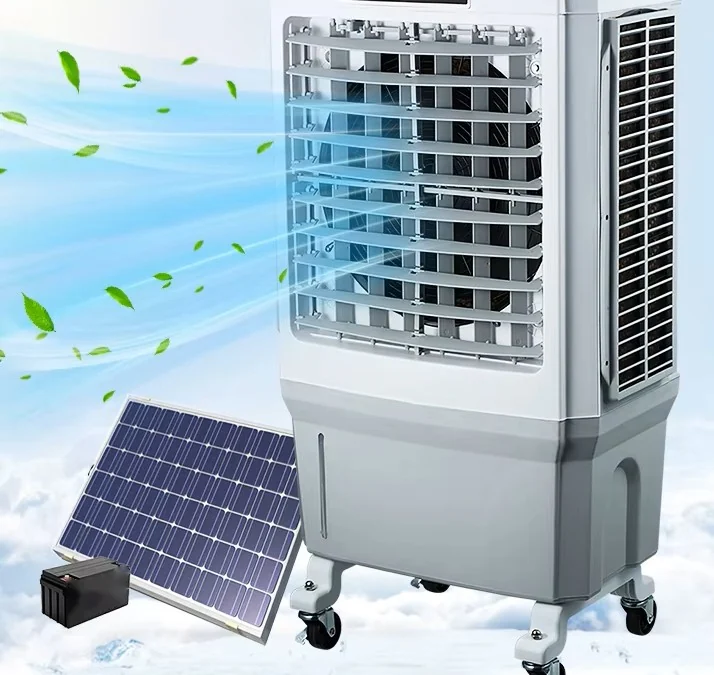
Can these coolers also run on solar power?
Yes. We are proud to announce that, thanks to their low energy consumption, these systems can run on solar power.
We use third-party statistics cookies (Histats) only if you accept them. You can change your choice at any time under ‘Cookie settings’ at the foot of the page. Cookie policy.